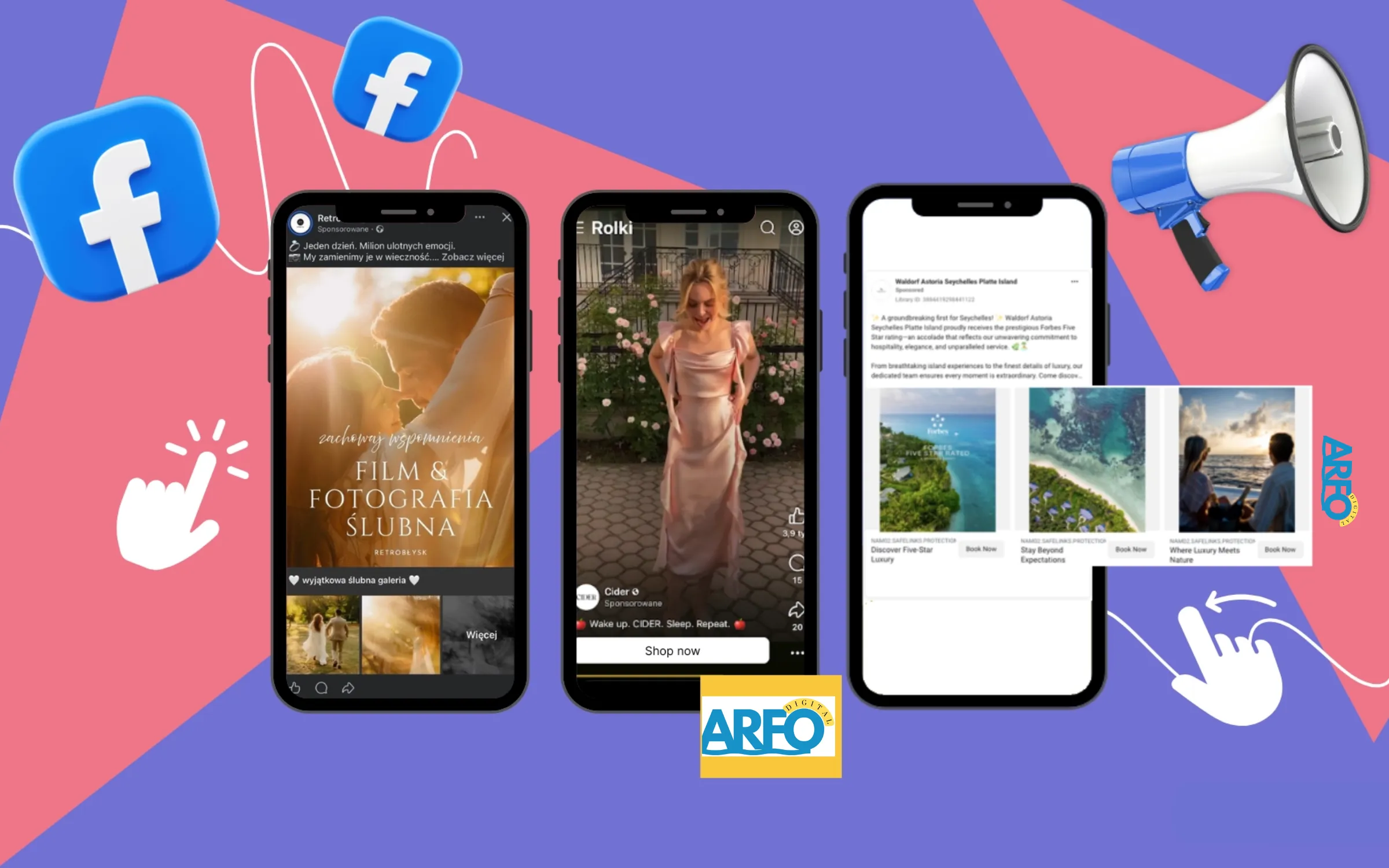
The best Facebook ads don’t just get clicks – they generate profitable conversions through strategic alignment of targeting, creative, and post-click experience. According to a WordStream study, Facebook ads achieve typical benchmarks of 2.53% CTR for lead-generation campaigns and 1.57% CTR for traffic campaigns, confirming that structured messaging and clear value propositions drive predictable engagement.
Performance, however, depends on more than the ad itself. A relevant landing page that aligns with the promise, tone, and offer in the ad increases conversion rates by reducing friction and strengthening message consistency. When your page mirrors the ad’s promise, tone, and offer, you reduce friction and strengthen message consistency – improvements that research shows can significantly boost conversion rates across industries. For this reason, advertisers who study proven Facebook ad examples and apply their structure to optimized post-click experiences transform clicks into qualified leads and sales, making an integrated strategy the foundation of effective digital advertising.
In the sections below, you will find carefully selected sample Facebook ads, insights behind the best Facebook ads, breakdowns of what defines good Facebook ads, and actionable lessons drawn from real high-converting Facebook ad examples that translate creative strategy into scalable results.
Clicks Are Expensive. Don’t Waste Them
Design landing pages that work perfectly with your digital strategy – and boost your ROI.
Improve ad performance

3 High-Converting Facebook Ad Examples
High-converting Facebook ads achieve one goal: turning impressions into leads or sales with measurable efficiency. The conversion rate reveals how well your ad performs this function—a high percentage means your audience targeting, creative execution, and landing page transition are working in harmony. What drives these conversions? Thumb-stopping visuals with high contrast that interrupt scrolling, concise copy that delivers one clear benefit, and credible social proof such as testimonials or star ratings. This combination reduces hesitation and compels action.
According to WordStream, Facebook Ads achieve an average conversion rate of 8.95% across all industries, though this varies considerably – from 3.95% in lower-performing sectors to 11.34% in higher-performing ones.
Facebook ads run on an auction system managed through Meta Ads Manager. When advertisers define their objective (lead generation, traffic, or sales), set a budget, and specify audience parameters, such as demographics, interests, and behaviors, they enter a competitive bidding environment. Meta’s algorithm decides which ads appear in users’ feeds, Stories, and other placements by evaluating three factors: bid amount, estimated action rates, and ad quality. The winning combination determines both ad delivery and cost per impression (CPM). Since auction performance depends on these variables, success requires both strategic targeting and creative relevance.
There are several main types of Facebook ads, each aligned with specific business goals:
- Image ads – single-visual ads that deliver a focused message and clear call to action.
- Video ads – motion-based creatives that explain products or demonstrate value within 15–60 seconds.
- Carousel ads – multi-card formats that showcase several products or features in one scrollable unit.
- Collection ads – mobile-first formats that combine video or image with product catalogs to drive e-commerce sales.
- Lead ads – native forms that capture user data directly inside the platform, reducing friction.
Each format supports different funnel stages, from awareness to conversion. The best Facebook ad examples combine the right format with precise targeting and a dedicated landing page that mirrors the ad’s promise.
Build Your Page
From scroll-stopping ads to sales-driving pages! Start building with Landingi.
Below, you will find three high-performing cases that demonstrate how structure, clarity, and relevance transform creative assets into measurable growth.
1. AirAsia MOVE
Brand: AirAsia Move
Industry: Travel booking
Results: 3.8× lift in incremental conversions
AirAsia Move’s 3.8× incremental conversion lift demonstrates what happens when ad creative aligns precisely with high-intent travel behavior – the campaign captured urgency, showcased value, and eliminated booking friction within a mobile-first context.
Visual strategy drove initial engagement. The ad featured vibrant, location-specific imagery that immediately translated abstract destinations into tangible experiences. This approach leverages a fundamental principle of travel marketing: visual triggers stimulate aspirational intent more effectively than descriptive copy. Headlines layered on urgency through limited-time offers and competitive fares, directly addressing the price sensitivity that drives comparison shopping across Southeast Asia’s travel market.
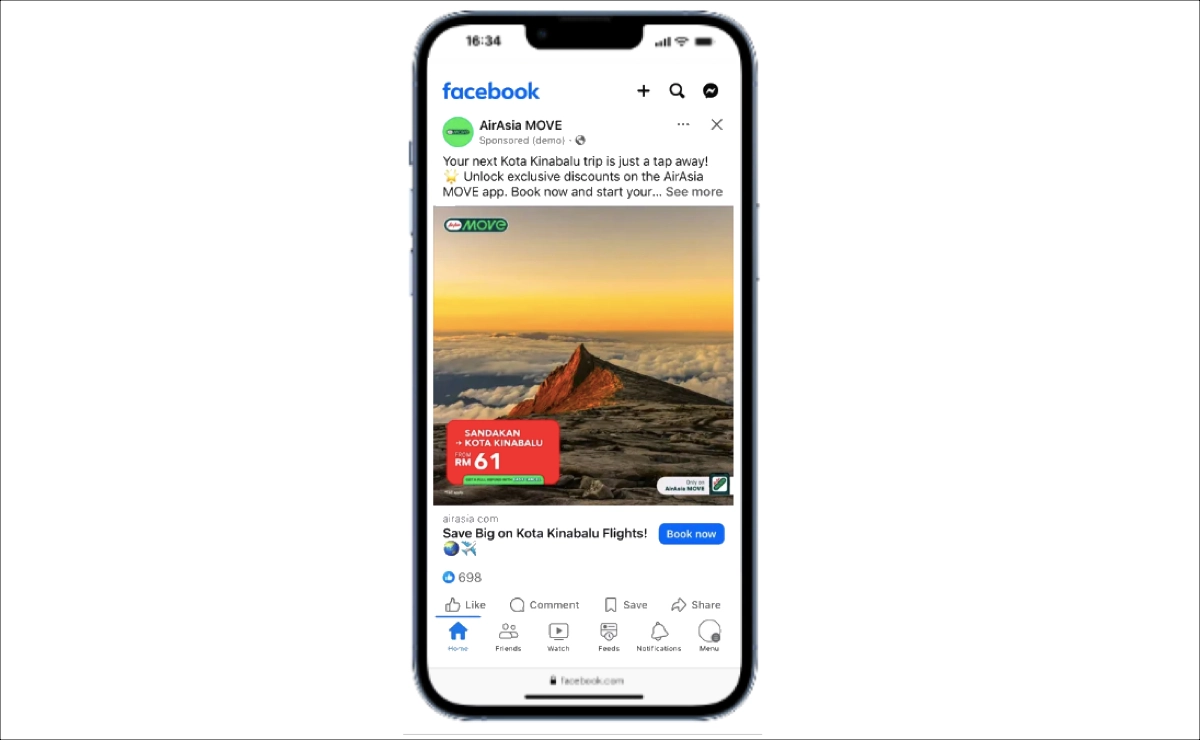
Copy and execution completed the conversion path. Messaging stayed concise and action-focused, highlighting immediate booking benefits – discounts, bundled options – instead of generic brand messaging. The call-to-action fed directly into a streamlined mobile booking flow, a design choice backed by conversion data: reducing steps between ad click and payment confirmation significantly increases completed transactions on mobile.
Three elements combine to drive the 3.8× performance: urgency-based pricing that compels immediate action, immersive visuals that transform consideration into desire, and frictionless booking that prevents drop-off. AirAsia Move proves that when creative both ignites intent and removes execution barriers, incremental conversions scale measurably.
2. PrimeCredit
Brand: PrimeCredit Limited
Industry: Consumer finance/credit cards
Results: 39% increase in completed registrations
PrimeCredit, a consumer financial group, needed to drive applications for its new WeWa credit card among Gen Z consumers. The company deployed a two-phase strategy: first, a video ad campaign featuring a young Hong Kong actor built brand awareness. Then, the team used Meta Ads Manager’s Opportunity Score – a 0–100-point diagnostic tool that evaluates campaign setup and suggests improvements – to optimize performance.