YouTube TrueView ads give brands control over reach, cost, and viewer attention in one advertising format. They let users skip, which makes every view intentional. That single mechanic changes how ads should look, sound, and convert – because advertisers must communicate the entire message clearly, even if viewers only watch the first few seconds.
Below, you will find clear explanations and four strong examples of TrueView video ads. Each shows how YouTube TrueView ads work in real campaigns and why they convert.
Clicks Are Expensive. Don’t Waste Them
Design landing pages that work perfectly with your digital strategy – and boost your ROI.
Improve ad performance
What are YouTube TrueView Ads?
YouTube TrueView ads are skippable video ad formats where you pay only when viewers show real interest. They give viewers a choice. People can decide to keep watching or skip after a few seconds. You pay when they stay engaged or click, based on clear rules in Google Ads and Google Display Network.
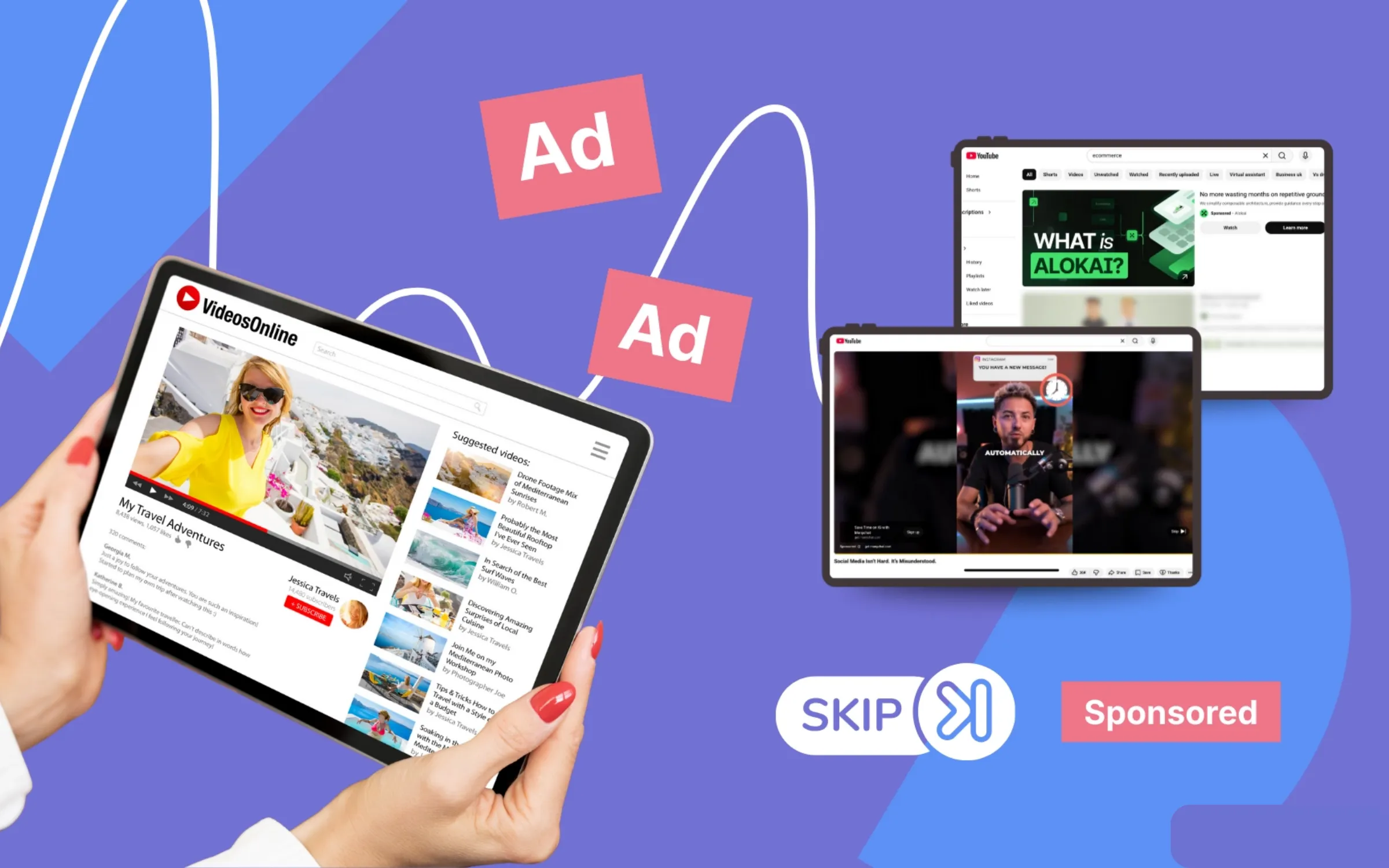
There are two main TrueView video ad types that matter most for marketers: in-stream ads and in-feed ads.
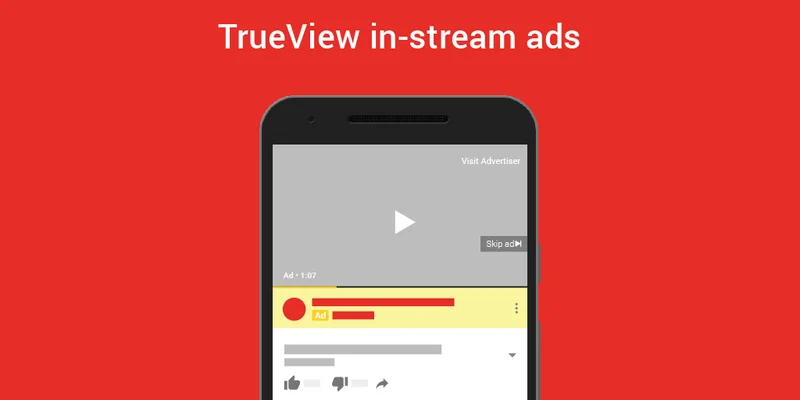
TrueView in-stream ads
In-stream ads play before, during, or after another YouTube video. Viewers can usually skip after five seconds. You pay when they watch at least 30 seconds, watch the whole clip if it is shorter, or click. In-stream TrueView ads are stronger for direct response, because they support action-focused bidding and clear CTAs.
TrueView in-feed ads (former TrueView discovery ads)
In-feed ads appear in YouTube search results, on the Home feed, or next to related videos. The ad looks like a regular video tile with a thumbnail, title, and short description. You pay when someone clicks to watch the video. In-feed TrueView ads are stronger for discovery and education, because they behave more like search results or suggested YouTube videos.
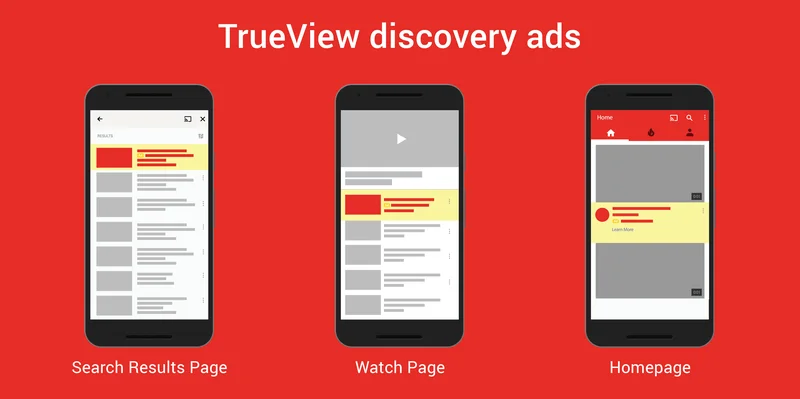
This structure makes YouTube TrueView ads flexible and easy to fit into a wider marketing strategy. They can work like search ads, social video, or classic pre-roll, depending on the format and the type of video content you promote.
TrueView views can build remarketing lists, so you can later reach people who watched your video with other campaigns.
Key metrics include view rate, average cost per view (CPV), and earned actions, which reflect real viewer engagement instead of passive impressions.
Because you pay only for views or clicks that meet set rules, wasted spend is lower. People who skip in the first seconds usually do not cost you money. That alone is a strong reason many brands favor TrueView video ads.
Get Started Free
Setting up TrueView ads in Google Ads
Turn attention into action! Capture engaged visitors with landing pages that actually perform.
Here are three core actions required to create video ads using the TrueView format in Google Ads:
- You create them under Video or Video action campaign types, link your YouTube channel, and select one or more videos.
- You choose a bidding strategy such as Maximize conversions, target CPA, or Maximize views, depending on your goal.
- You define audiences and ad placements by using keywords, topics, custom segments, and specific YouTube channels or videos.
Once these basics are in place, you can layer in frequency caps, devices, and schedules. Over time, you refine campaigns based on real performance data instead of guesses.
What is the Importance of YouTube TrueView Ads for Digital Marketers?
YouTube TrueView ads are important for digital marketers because they mix large reach, intent data, and control over how you pay.
You get access to YouTube’s huge audience and strong targeting at the same time. You can target by keywords, topics, interests, placements, and custom audiences. That lets you reach people based on what they watch, search, or plan to buy.
You also have control over how you pay. You pay for a view or click only when someone stays engaged long enough. Quick skips usually do not count as a paid view. This protects your budget from people who are clearly not interested.
In many accounts, a single TrueView view costs less than a click in search campaigns, so you can test messages cheaply before scaling.
TrueView video ads also support the whole funnel. You can:
- Use in-stream for clear offers, signups, and remarketing.
- Use in-feed for education, product demos, and content promotion.
You can track views, clicks, watch time, and conversions. That data helps you improve creative and targeting over time.
Finally, YouTube TrueView ads integrate well with landing pages and tracking. You can send viewers to a focused page, fire pixels, and measure revenue, not only views.