Digital audio advertising is no longer emerging – it’s scaling fast. According to a study by Knowledge Sourcing Intelligence, the global digital audio advertising market is expected to grow at a 6.02% CAGR, reaching $51.11 billion by 2030. In the U.S. alone, digital audio ad spend has already surpassed $13 billion, with podcast ads and programmatic audio leading that growth.
As audio becomes central to digital marketing, success depends on choosing the right formats, measuring performance accurately, and converting listeners into customers. From streaming audio ads to podcast ads, each channel requires a different approach to structure, timing, and user intent.
This article walks through the key audio ad formats, performance metrics like listen-through rate and brand lift, and the role of landing pages in audio advertising. Whether you’re scaling campaigns or testing new channels, it’s built to support effective, data-driven digital advertising.
Clicks Are Expensive. Don’t Waste Them
Design landing pages that work perfectly with your digital strategy – and boost your ROI.
Improve ad performance
What Are Audio Ads?
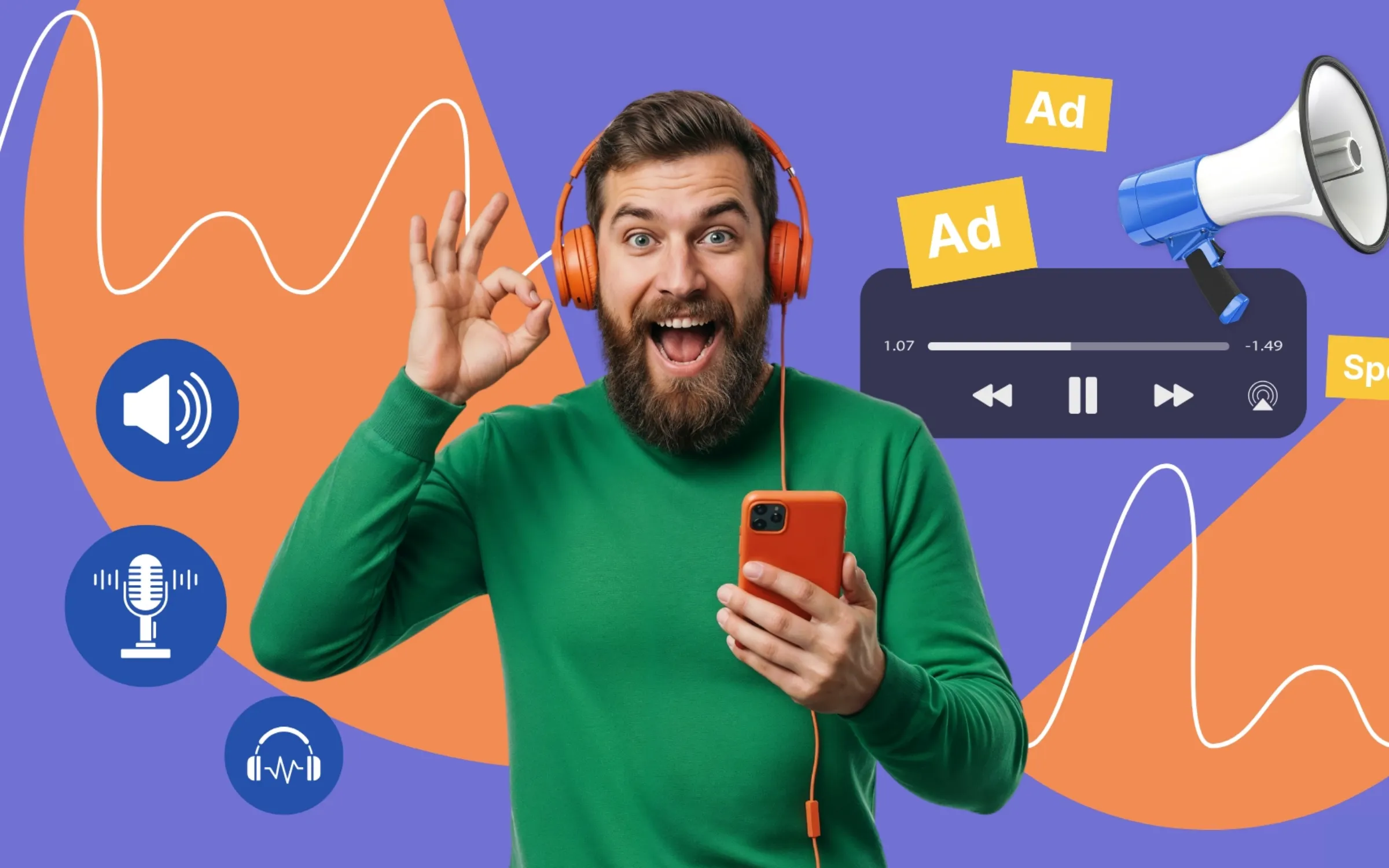
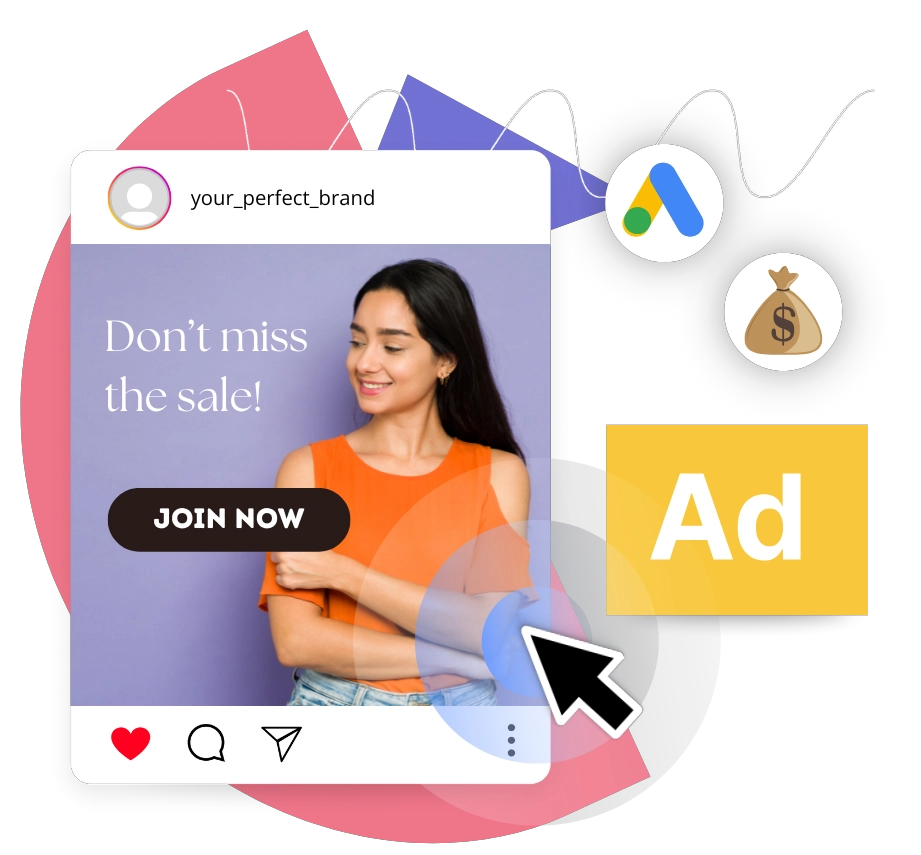
Audio ads are digital advertisements delivered as audio messages through streaming platforms, as defined by the Interactive Advertising Bureau (IAB). To be more precise, it is an audio-focused advertising format broadcast on podcast platforms, Spotify, and YouTube, often with a static image or simple animation.
Audio ads are typically inserted before, during, or after a piece of audio content, such as a podcast, playlist, or radio stream. Audio advertising is used to build reach, strengthen brand recall, and drive performance through features such as promo codes and clickable companion banners.
Build Your Page
Audio grabs attention – Landingi turns it into action. Start building landing pages now!
8 Audio Ad Examples
Audio ad examples help structure your message based on campaign goals, placement length, and audience intent. Below are practical formats used across podcast ads, streaming audio ads, and other digital channels. These are not tied to specific brand campaigns but offer adaptable scripts for various use cases.
1. 30-Second Direct Response
Direct response ads are built for immediate action – signups, downloads, or purchases. They work best when you have a clear offer and want measurable results fast. This format moves listeners from problem to solution in seconds, making it ideal for performance-driven campaigns on streaming platforms or podcast mid-rolls.
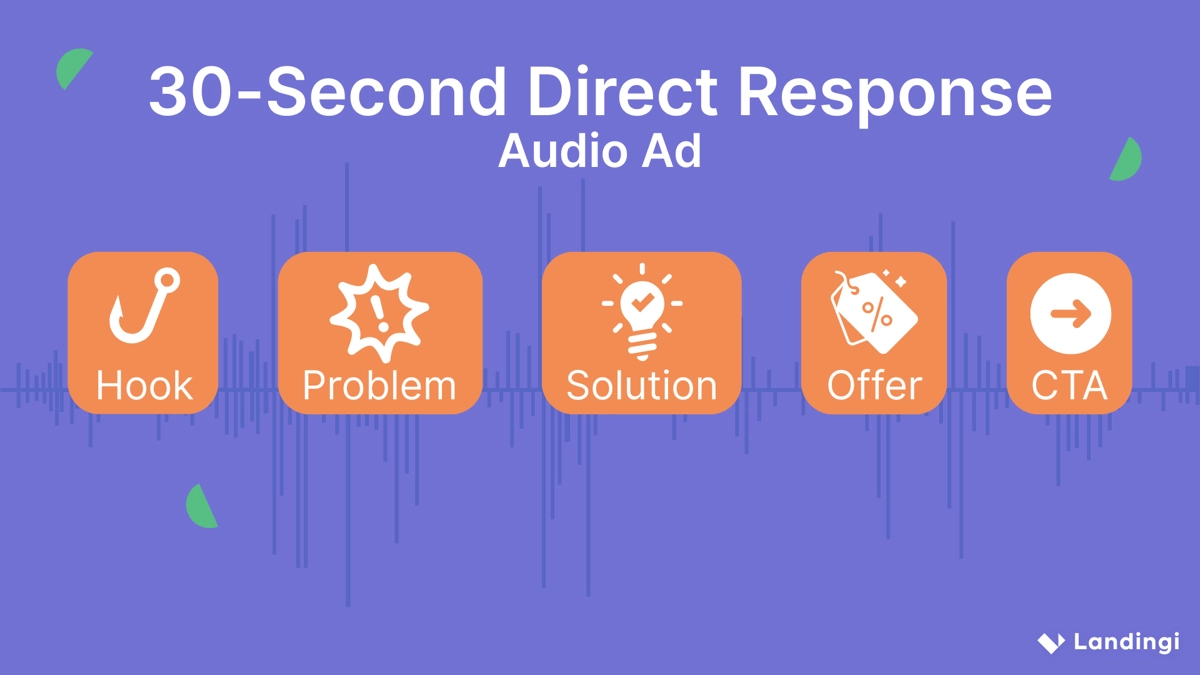
Structure: Hook → Problem → Solution → Offer → CTA
Script template (ca. 70 words):
- Narrator (energetic): “Tired of [pain point], but never have time to [desired action]?”
- Narrator: “Meet [PRODUCT], the easy way to [main benefit] in just [time frame].”
- Narrator: “With [key feature 1] and [key feature 2], you can [result] without [big objection].”
- Narrator (urgent): “Try [PRODUCT] today and get [intro offer] when you visit [WEBSITE] and use code [CODE].”
Example: “Tired of skipping workouts, but never having time to get to the gym? Meet App, the easy way to stay in shape in just 15 minutes a day. With personalized routines and real-time coaching, you can build strength without expensive equipment. Try App today and get 1 week free when you visit app dot com and use code STRONG. “
2. 15-Second Promo
Short promos maximize frequency without overwhelming listeners. Perfect for time-sensitive offers or brand reinforcement, these quick spots fit seamlessly into ad pods on music streaming services. The brevity demands laser focus – every word earns its place.
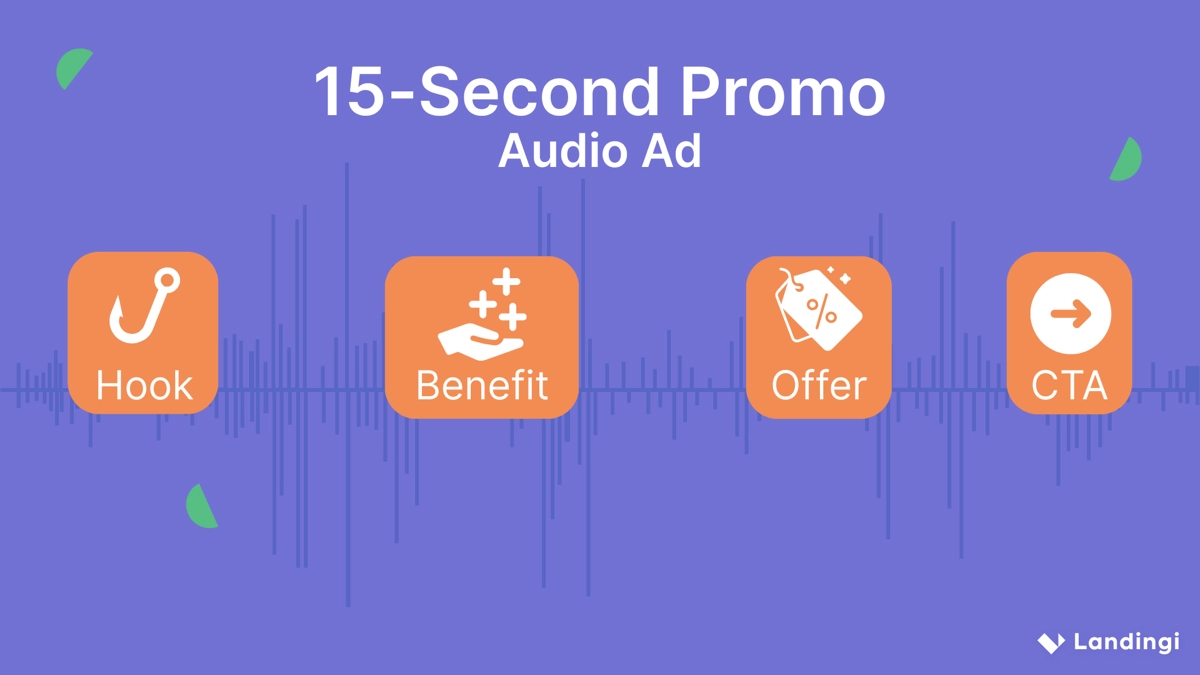
Structure: Hook → Benefit → Offer → CTA.
Script template (ca. 35 words):
- Narrator (upbeat): “Struggling with [problem]?”
- Narrator: “Try [PRODUCT] – [main benefit].”
- Narrator (urgent): “[Discount or offer] this week only at [WEBSITE].”
Example: “Struggling with restless nights? Try Product – better sleep through science-backed sound therapy. 20% off this week only at product dot com.”
3. Story-Driven Problem–Solution Template
Storytelling creates emotional connection, making it powerful for longer podcast placements where listeners are already engaged. This format uses narrative to illustrate transformation, helping audiences see themselves in the story. It works especially well for products that solve persistent, relatable problems.
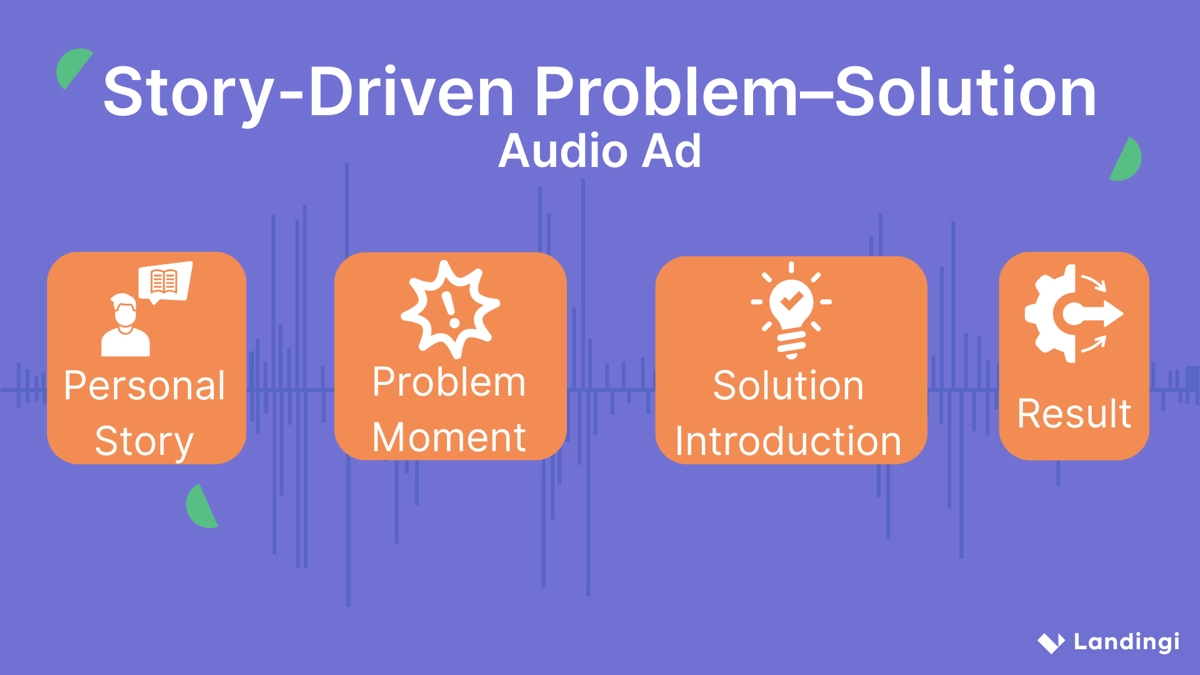
Structure: Personal story → Problem moment → Solution introduction → Result
Script template (ca. 90 words):
- Narrator (relatable): “Last [time period], I was [negative situation]. [Specific struggle detail].”
- Narrator: “Then I discovered [PRODUCT].”
- Narrator (positive shift): “Within [time frame], I noticed [specific improvement]. Now, [current positive state].”
- Narrator: “[PRODUCT] uses [key feature] to help you [main benefit]. No [common objection], just [result].”
- Narrator (casual CTA): “If you’re dealing with [problem], check out [PRODUCT] at [WEBSITE].”
Example: “Last month, I was struggling to focus at work. I’d hit 2 PM and just crash completely. Then I discovered Product. Within three days, I noticed I could power through afternoon meetings. Now, I’m actually productive all day. Product uses natural nootropics to help you stay sharp without the jitters. No caffeine crashes, just clean, sustained energy. If you’re dealing with brain fog, check out Product at product dot com.”
4. Host-Read Podcast Ad
Host-read ads leverage the trust and authenticity podcast hosts have built with their audiences. These feel less like ads and more like personal recommendations, which significantly improves reception and recall. The host’s voice and style make the message native to the content, reducing listener resistance.